
A propos de moi
Tout a commencé avec un alphabet que je ne connaissais pas.
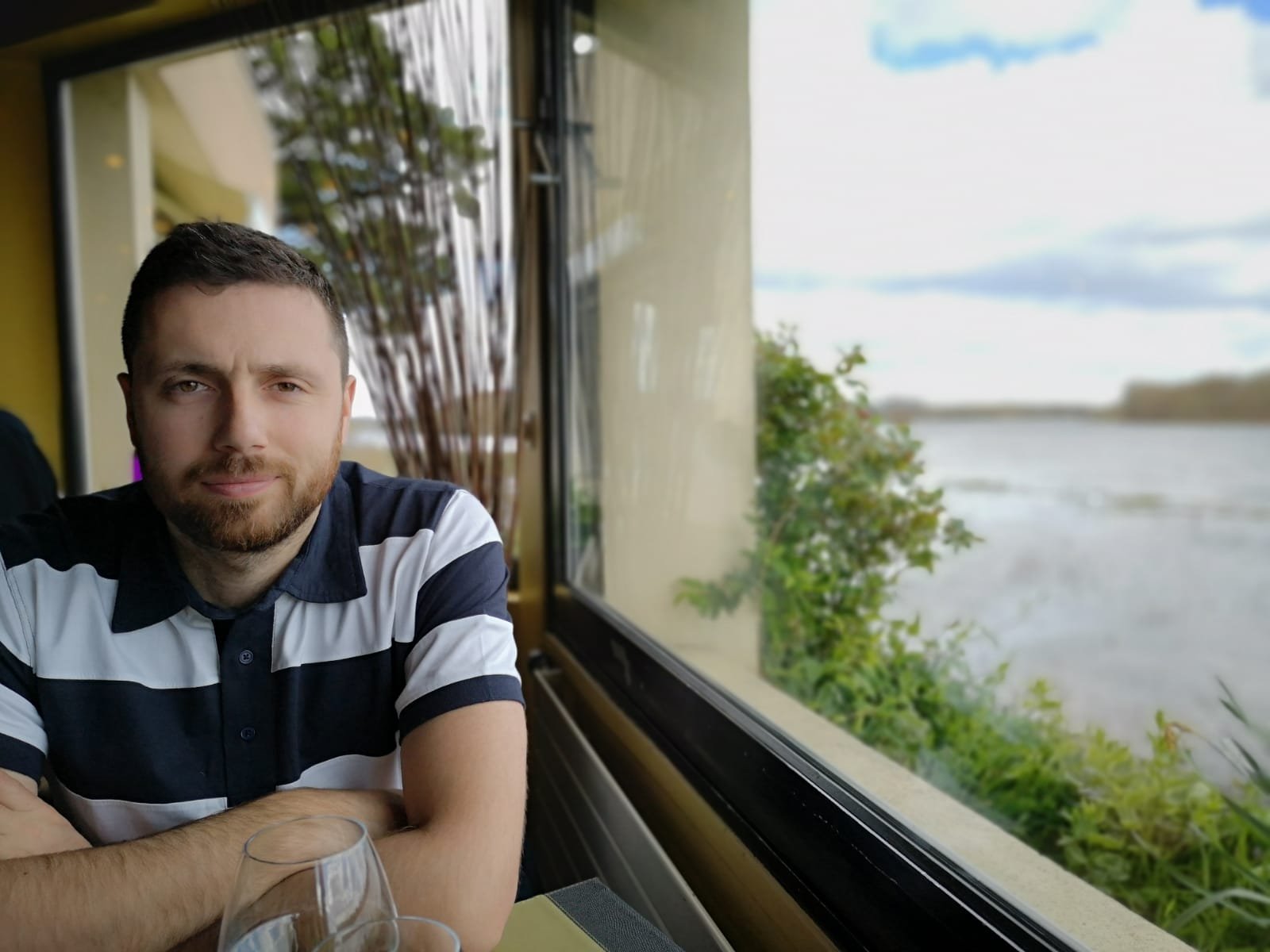
Je m’appelle Conor.
Vers 8 ou 9 ans, j'allais souvent chez ma tante et mon oncle, qui vivaient à la campagne.
Ils avaient une grande encyclopédie, et dès qu'on avait un moment de libre, je passais des heures à en tourner les pages. Il y en avait une, en particulier, qui me captivait.
C’était une page sur les langues et les alphabets.
Je suis tombé sur l'alphabet hindi, écrit en entier, et quelque chose m'a marqué. L'idée que tous ces signes étranges aient un sens — qu’il y avait derrière ces formes inconnues tout un monde de mots et de pensées. Je les ai tous recopiés sur une feuille, sans trop savoir pourquoi, avec l'idée vague de créer quelque chose d'indéchiffrable pour les autres. Un code secret, en quelque sorte.
Ma tante a vu ce que je faisais. Au lieu de me demander pourquoi, elle m'a encouragé — et très vite, elle a commencé à m'apprendre quelques mots de français.
Et là, quelque chose a basculé.
Je découvrais que ces sons étranges, ces orthographes déconcertantes, pouvaient s'assembler et finir par vouloir dire quelque chose. Et surtout, servir à communiquer avec de vraies personnes. À partir de là, j'étais accro.
J'ai convaincu mes parents de m'acheter un premier livre de français. Quand le français a démarré à l'école, j’absorbais chaque détail, chaque règle, chaque exception.
Mais il y avait un problème
En cours, c'était tout ou rien. Au début, trop facile - je connaissais déjà l'essentiel, rien ne me mettait vraiment au défi. Puis, d'un coup, trop difficile. À 17 ans, on lisait François Mauriac - un français littéraire, dense, exigeant, encore ardu pour moi aujourd'hui. Jamais de juste milieu.
Au bout de sept ans, je maîtrisais tous les temps, tous le grammaire, mais face à un français pour une conversation ordinaire… je bloquais complètement.
Je connaissais le français. Mais je n'étais pas capable de m'en servir.
Puis, à 19 ans, je suis parti au Pérou.
Cinq mois à vivre et travailler dans l'Amazonie péruvienne, sur un projet de conservation de la forêt tropicale. J'arrive en janvier avec presque zéro espagnol. Je repars en juin en le parlant couramment — mieux que je n'avais jamais parlé français après 7 ans d'études
Cinq mois contre sept ans.
C’est là que tout a changé.
Ce n'était pas une question d'aptitude.
C'était une question de méthode.
Au Pérou, j'ai appris l'espagnol parce que j'en avais besoin. Il fallait que je communique : travailler avec mes collègues, commander à manger, me faire des amis, résoudre des problèmes. Chaque échange comptait. Chaque erreur n'était qu'une étape de plus. Pas de manuels, pas d'exercices de grammaire — juste de vraies personnes qui cherchaient à se comprendre.
Le contraste était saisissant.
Quand les langues sont devenues un outil professionnel
Après un master en traduction, j’ai travaillé pendant près de dix ans dans le commerce international pour un fabricant industriel.
J’ai accompagné des clients et des distributeurs en Europe, en Afrique et en Amérique latine, préparé des offres techniques et commerciales et représenté mon entreprise dans plus de 20 pays.
J’y ai appris qu’en entreprise, bien communiquer ne signifie pas nécessairement parler parfaitement. Il faut surtout comprendre son interlocuteur et transmettre son message avec suffisamment de clarté et de précision pour faire avancer la discussion.
De l’entreprise internationale à la formation
Ce travail m’a également permis de rencontrer ma future épouse, une collègue française arrivée dans l’entreprise en 2015.
Lorsque nous avons décidé de nous installer en France, j’ai profité de ce changement pour me consacrer à un domaine qui m’avait toujours passionné : l’apprentissage des langues.
J’ai obtenu le CELTA, une qualification internationale pour l’enseignement de l’anglais, et j’accompagne des adultes et des professionnels depuis 2019.
CG Langues réunit ainsi les deux dimensions de mon parcours : la formation linguistique et une expérience concrète de l’entreprise internationale.
Une formation ancrée dans votre réalité
Vous êtes l’expert de votre métier. Mon rôle est de vous aider à expliquer ce que vous faites, à présenter vos idées et à interagir en anglais avec davantage d’aisance et de précision.
Les formations s’appuient donc sur des situations que vous rencontrez réellement : réunions, appels avec des clients, présentations ou explications techniques. La grammaire reste importante, mais elle est travaillée au moment où elle devient utile à votre communication.
Je continue moi-même à apprendre des langues — actuellement, l’italien. Cela me rappelle ce que signifie chercher ses mots, hésiter et se tromper avant de parvenir à se faire comprendre.
C’est pourquoi je cherche à créer un environnement dans lequel chacun peut parler, essayer et progresser sans se sentir jugé.
Vous souhaitez pouvoir exprimer en anglais toute l’expertise que vous possédez déjà dans votre métier ?
Échangeons sur vos besoins.